

Integration Over Assumption: Connecting BIM to Scheduling and Cost Control

Westgate Koenig
Are you looking for a partner to efficiently guide you through the complexities of a capital project? Would you like to drive collaboration and establish strong working partnerships across the entire project team? Are you seeking accurate, unbiased cost clarity and improved risk mitigation?
SHARE THIS ARTICLE


Published on:
February 9, 2026
Integration Over Assumption: Connecting BIM to Scheduling and Cost Control
In most construction projects, cost and schedule exist downstream from design — updated after drawings are issued, bids are received, and delays begin.
At Westgate, that sequence doesn’t exist.
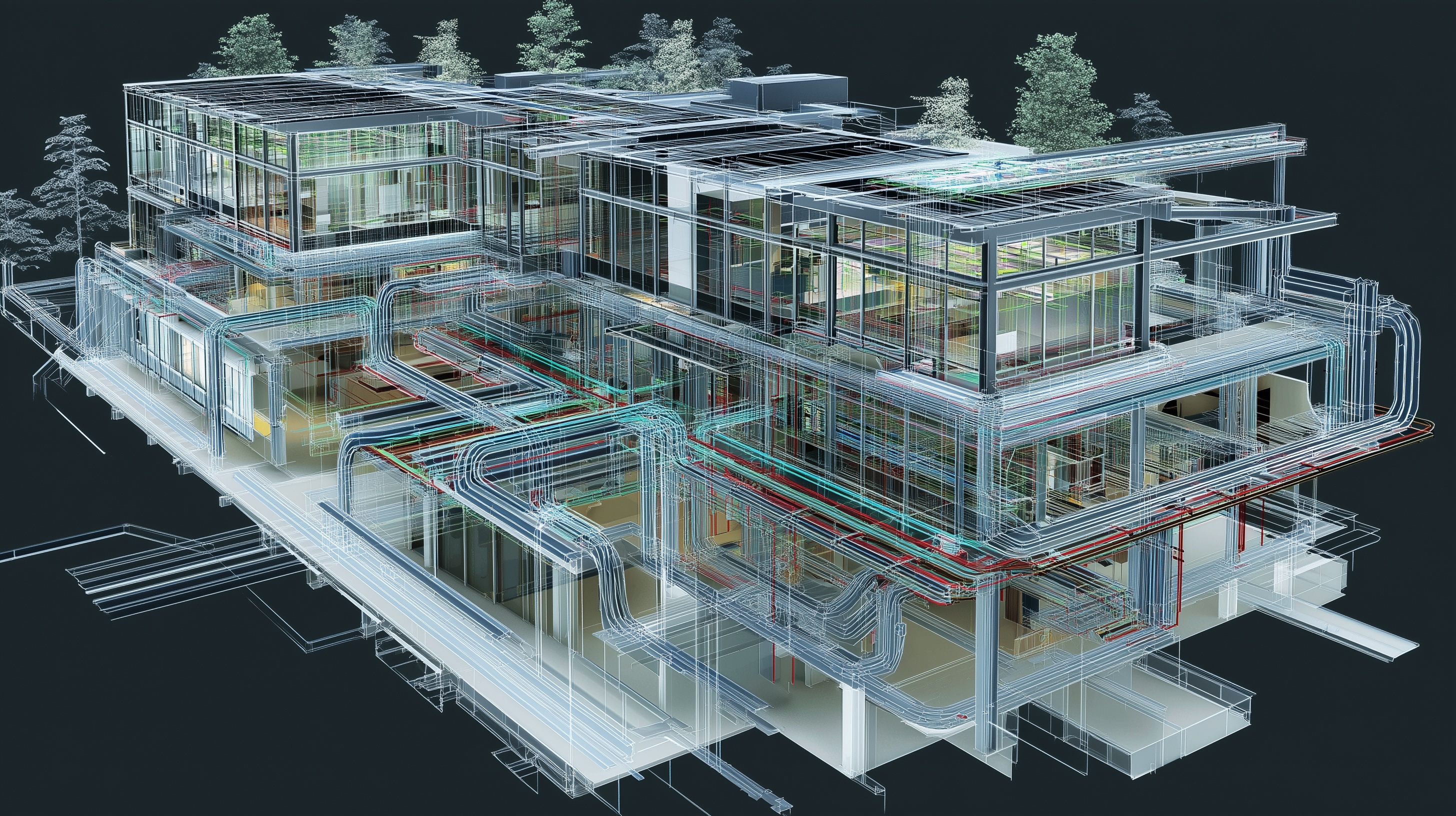
We integrate Building Information Modeling (BIM) directly into project management systems, connecting geometry to cost, and design to delivery.
This isn’t technology for show.
It’s operational precision.
1. From Model to Management
In a conventional workflow, drawings inform cost estimates. In ours, the model is the estimate.
Every material, component, and system within the BIM model carries embedded cost and duration data.
When design changes, those adjustments flow instantly into the schedule and budget.
This creates a living ecosystem of data — not separate silos of design, cost, and construction.
Decisions aren’t based on assumption. They’re verified in real time.
2. Cost Certainty Through Connected Data
By linking the BIM model to estimating software, Westgate Koenig generates quantitative takeoffs directly from the model — not from manual counts or historical averages.
This provides precise cost forecasting early, while design is still flexible.
It also eliminates one of the most common failure points in commercial construction: cost drift between concept and execution.
In our process, every design iteration carries financial transparency.
Budgets aren’t approximations — they’re synchronized calculations.
3. Schedule Precision Through Simulation
Integration extends beyond cost.
Each modeled element is tied to a timeline, allowing our teams to simulate the entire build sequence digitally before mobilization.
Clash detection meets critical path management.
This provides clients with verified delivery timelines, informed by logistics, resource allocation, and construction sequencing — not guesswork.
When we commit to a schedule, it’s already been built once. Virtually.
4. Visibility for All Stakeholders
Our integrated model allows clients, consultants, and site teams to visualize progress and performance against the plan.
Every update — from design revisions to procurement milestones — is reflected in one coordinated platform.
This reduces miscommunication and strengthens accountability at every level.
When everyone sees the same data, alignment stops being a challenge.
It becomes automatic.
5. The Elimination of Assumption
Traditional construction management still relies on assumptions — projected costs, estimated timelines, and interpretive design coordination.
Integration replaces those assumptions with verified information.
The model doesn’t predict outcomes. It confirms them.
This is how control is achieved — not through reaction, but through connection.
The Westgate Koenig Standard
BIM is more than a modeling tool.
It’s the foundation of a fully integrated project delivery system that connects design, cost, and schedule into one verifiable process.
Our builds are not managed in isolation.
They’re managed in sync.
Integration over assumption.
That’s the difference.
About Westgate
At Westgate, our team of construction professionals, distinguished by Canada's prestigious Gold Seal certification - the highest national benchmark for construction management excellence - brings together the best of two nations.


Popular Blogs & Projects

Contact Us
Let’s successfully turn your vision into reality.

Our Services
Pre-Construction
Project Controls
Design-Build Services
General Contracting
Construction Management
Service Division
Stay up to date with westgate
Subscribe to Our Newsletter
At Westgate Koenig, we don't just build structures – we build lasting partnerships. Our commitment to quality, innovation, and client satisfaction drives every decision we make. From initial concept to final handover, experience the difference of working with a commercial construction partner who truly understands your vision.


200-100 Park Royal
West Vancouver, V7T 1A2
5900 Balcones Drive STE 100
Austin, Travis County
TX 78731 USA
Fort Worth
Dallas
San Antonio
Okanagan, BC
Vancouver
Seattle
Tri-Cities, Washington
Whitehorse, Yukon
Copyright © 2025 Westgate Koenig | Privacy Policy